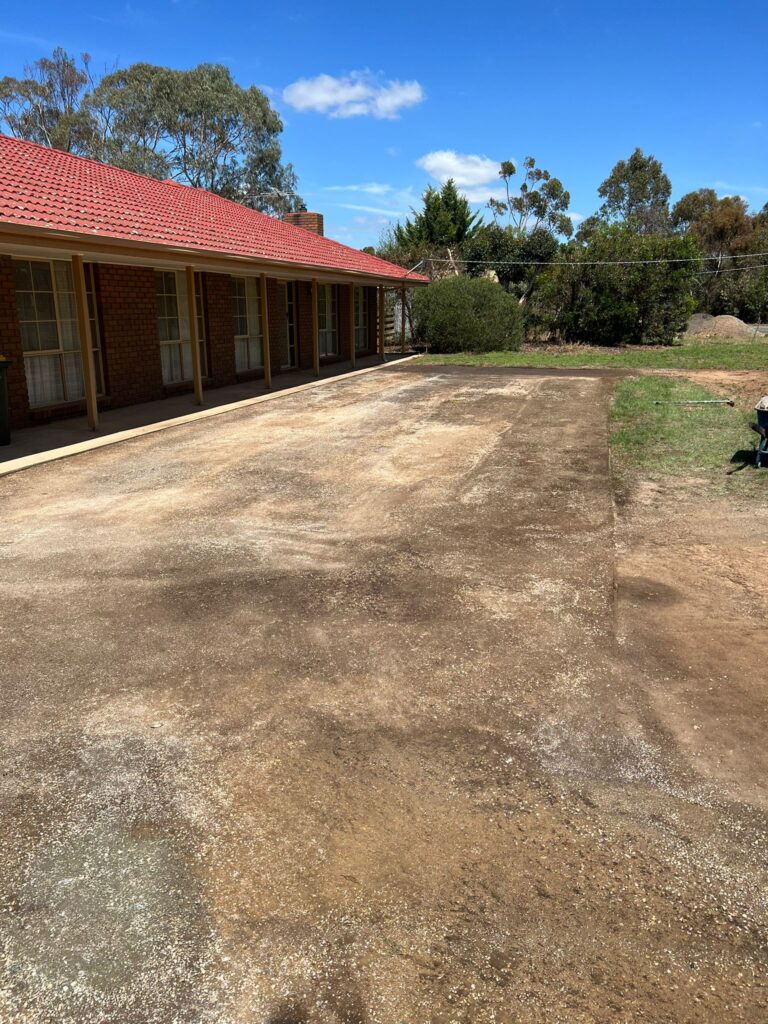
Heavy rain can expose weaknesses in a driveway very quickly. Areas that previously appeared relatively stable may develop ruts, washouts, potholes, loose material or channels where flowing water has carried part of the surface away. In many situations, professional grading can play an important role in restoring the driveway and improving the way it handles future rainfall.
However, grading is not simply a matter of smoothing over visible damage. For property owners in Mudge, NSW, an effective repair requires an assessment of how extensively the driveway has deteriorated, whether the underlying material remains suitable and why water caused damage in the first place.
What Happens to a Driveway During Heavy Rain?
A well-constructed driveway should be shaped so rainfall moves away from the trafficable surface in a controlled manner. When drainage is inadequate, water can begin flowing along or across the driveway instead.
Moving water can displace loose material, create channels and erode vulnerable sections. Water that remains in depressions can also penetrate the pavement and weaken the supporting layers.
Common signs of rain-related driveway damage include:
- Ruts and wheel-track depressions
- Potholes
- Washouts
- Loose or displaced gravel
- Erosion along driveway edges
- Channels formed by flowing water
- Low areas where water collects
- An uneven or corrugated driving surface
Grading can correct many of these issues when the remaining pavement is suitable for restoration.
What Does Driveway Grading Actually Do?
Grading reshapes the driveway to restore a more consistent profile.
Rather than simply moving material across the surface, professional grading aims to correct irregularities and establish appropriate levels so vehicles have a more stable area to travel over and rainfall can drain effectively.
Depending on the driveway’s condition, the process may involve redistributing suitable existing material, correcting ruts, reshaping damaged areas and preparing the surface for compaction.
Additional pavement material may be required where heavy rain has washed away significant sections or where the existing material is no longer sufficient to create the required profile.
Can Grading Repair Ruts?
Ruts are one of the most common problems that can appear or worsen following wet conditions.
Repeated vehicle movements over softened pavement can create depressions along wheel paths. These depressions can then trap additional water, contributing to further deterioration.
Grading can reshape suitable pavement material and remove these depressions before the driveway is compacted again. Restoring the correct profile also helps prevent wheel tracks from becoming convenient drainage channels during future rainfall.
Deep rutting, however, may indicate that the underlying pavement has lost strength. In that situation, simply levelling the upper surface may not provide a lasting result.
Can Grading Fix Potholes?
Grading can form part of pothole restoration, particularly on unsealed driveways where damage is spread across the surface.
However, simply dragging loose material into a pothole is unlikely to address an underlying weak section. Failed or unsuitable material may need to be removed, and the affected area may require additional preparation before it is rebuilt and compacted.
Where potholes repeatedly form in the same locations, drainage and base condition should also be investigated.
The objective should be to correct the reason the pothole developed rather than temporarily hiding the depression.
Correcting Washouts and Erosion
Heavy rainfall can move substantial amounts of loose material, particularly where water is concentrated into a fast-moving flow.
Minor washouts may be corrected by restoring lost material, grading the driveway back to an appropriate shape and compacting it properly.
More significant erosion can require additional work. If part of the pavement structure has been washed away, suitable material needs to be reinstated before the final surface profile is established.
The route taken by the water should also be considered. Rebuilding a washed-out section without changing the conditions that caused the erosion can result in the same area being damaged during another period of heavy rain.
Why Drainage Is Central to Successful Grading
Good grading and effective drainage work together.
A driveway should have appropriate falls that encourage rainfall to leave the trafficable surface instead of travelling along it or collecting in depressions. The exact profile will depend on the layout and surrounding ground conditions.
Water also needs somewhere suitable to go once it leaves the driveway. If drainage routes are obstructed or poorly positioned, water can return to the pavement or erode its edges.
For driveways in Mudge, NSW, addressing water movement as part of the grading process is essential if the goal is to reduce recurring rain-related damage.
Compaction Is Just as Important as Reshaping
A driveway can look smooth immediately after grading but still perform poorly if the material has not been adequately compacted.
Compaction helps create a stable pavement by reducing movement within the prepared material. This allows the surface to withstand regular vehicle traffic more effectively and reduces the likelihood of rapid deformation.
Grading and compaction should therefore be treated as connected stages rather than separate considerations.
When Is Grading Alone Not Enough?
Grading is highly useful, but it cannot correct every form of driveway failure.
If heavy rain has caused extensive base failure, deep erosion or significant loss of pavement material, sections of the driveway may need to be rebuilt before grading can produce a reliable result.
Warning signs that more substantial work may be necessary include:
- Deep depressions returning soon after previous grading
- Large areas that remain soft or unstable
- Extensive loss of pavement material
- Severe erosion
- Persistent water pooling
- Repeated potholes in the same locations
- Significant movement under vehicle traffic
A professional assessment can determine whether the existing pavement can be successfully reworked or whether damaged sections require reconstruction.
Grading Can Prepare a Driveway for Surfacing
Restoring the shape and stability of an existing driveway can also be an important preparation stage before asphalt or bitumen surfacing.
A new sealed surface should not be expected to correct major problems underneath it. If the driveway has poor levels, weak sections or inadequate drainage, those issues can eventually affect the finished pavement.
Professional grading helps establish an appropriate profile and provides the opportunity to correct defects before surfacing takes place.
For a driveway in Mudge, NSW, investing attention in preparation can significantly influence how effectively the completed surface performs.
Preventing the Same Damage From Returning
The best grading work does more than make a damaged driveway look level again. It should address the conditions contributing to deterioration.
This means considering where rainfall enters the driveway, where it travels, where it collects and whether the pavement has sufficient strength for regular traffic.
Following restoration, property owners should also watch for early signs such as new depressions, blocked drainage routes, edge erosion and developing potholes. Addressing these issues early can help prevent another period of heavy rain from causing extensive damage.
Why Professional Grading Makes a Difference
Effective driveway grading requires an understanding of levels, drainage, pavement materials and compaction.
Removing every visible depression without considering water movement can actually leave a driveway vulnerable to future problems. Professional contractors assess the entire surface and aim to create a profile that supports both reliable vehicle access and effective drainage.
This is particularly important when grading forms part of a larger asphalt or bitumen surfacing project, because the quality of the finished surface depends heavily on the preparation beneath it.
Conclusion
Grading can restore many driveways damaged by heavy rain, particularly where the main problems involve rutting, potholes, displaced material, minor washouts and an uneven surface profile. It can reshape the pavement, improve drainage and prepare the driveway for effective compaction or subsequent surfacing.
The extent of the damage ultimately determines whether grading alone is sufficient. Where heavy rain has weakened the pavement base, caused substantial erosion or removed significant amounts of material, additional reconstruction may be required before the driveway can be properly restored.
Mudge Road Tek provides professional grading, asphalt and bitumen surfacing solutions for properties in Mudge, NSW. If heavy rain has left your driveway rutted, washed out or difficult to use, contact our team to have the surface assessed and discuss the most appropriate approach to restoring it.
Call us on: 02 5301 9087
Click here to find out more about Mudge Road Tek
Click here to complete our contact form and see how we can help with your Asphalt and Bitumen Surfacing needs.